
Process
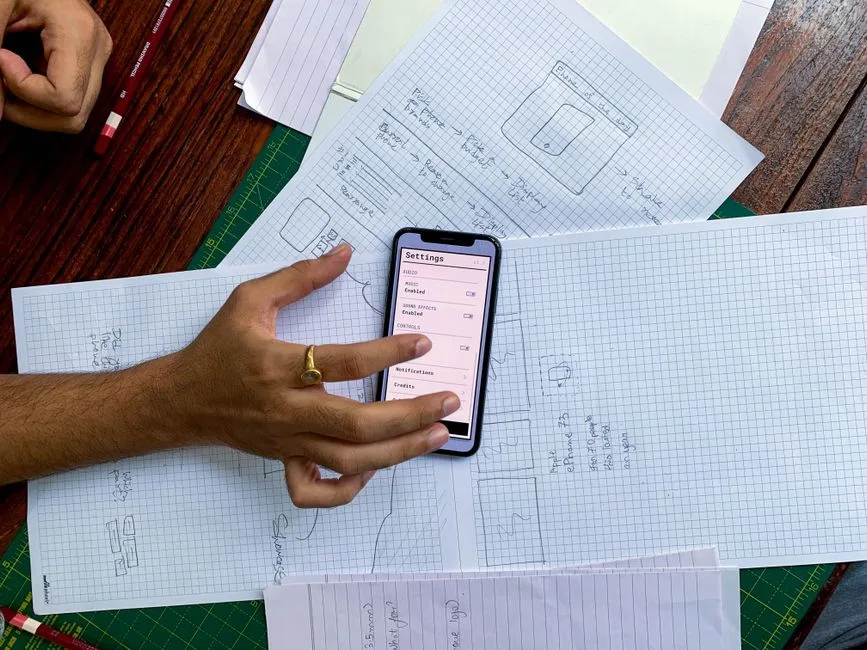
Our MVP development process leverages AI-assisted engineering to automate repetitive coding, testing, and deployment tasks, overseen by senior architects. We begin with a focused discovery sprint to define the single, core user journey and the essential feature set. Development follows using modern stacks like React Native for cross-platform mobile or Next.js for web, with AI augmenting code generation and peer review. Automated testing suites and continuous integration pipelines are established from day one, ensuring each increment is production-ready. This methodology, which integrates practices from the OWASP MASVS mobile security standard, typically achieves 85%+ unit test coverage within the first sprint, enabling a shippable MVP in 2-4 weeks instead of months.
Technology Stack
- WCAG 2.2 AA Accessibility
- OWASP Application Security Verification Standard
- Apple App Store & Google Play Developer Policies
- General Data Protection Regulation (GDPR) Readiness
Reference Project Parameters
| Parameter | Reference Value |
|---|---|
| Typical MVP Timeline | 2-4 weeks |
| Core Tech Stack | React Native, Next.js, Node.js, PostgreSQL |
| Initial Sprint Duration | 1 week |
| Typical Backend Latency Target | <200 ms |
| Security Baseline | OWASP MASVS Level 1 |
Local Considerations — USA
The demand for rapid MVP development varies across U.S. tech hubs, influencing our engagement model. In established ecosystems like New York's fintech or Boston's biotech sectors, clients require robust, compliance-ready architectures from the outset, often integrating with legacy systems. In rising hubs like Atlanta or Raleigh, startups prioritize extreme speed and lean cost structures to secure seed funding. Our AI-accelerated delivery is calibrated for both: we implement SOC 2 controls for enterprise clients in Chicago or Washington D.C., while offering streamlined packages for pre-seed startups in Austin or Miami. This flexibility, backed by a deep national talent pool, allows us to partner effectively from the initial concept in Allentown to the scale-up phase in Los Angeles.
Request a Quote
Our team reviews your project and issues an initial report at no cost.
Or write us directly at [email protected]
Frequently Asked Questions
How can you deliver an MVP in just 2-4 weeks?
Our timeline is achieved through an AI-accelerated development workflow. AI tools automate significant portions of code generation, testing, and QA, which are then rigorously reviewed and integrated by senior engineers. This automation of repetitive work allows the team to focus on core logic and architecture, delivering at roughly one quarter the speed of a traditional agency.
What is the typical technology architecture for an MVP?
We architect for scalability from the start. A common stack includes React Native for iOS/Android, a Next.js web dashboard, a Node.js backend API, and a managed PostgreSQL database on AWS or Google Cloud. This provides a robust foundation that can evolve into a full-scale product without a costly rebuild.
How do you ensure quality and security in such a fast-paced build?
Quality is enforced through automation and senior oversight. We mandate comprehensive test automation, static code analysis, and peer review for all commits. Security is baked in using the OWASP MASVS framework as a baseline, ensuring authentication, data encryption, and API security are addressed before launch.
What is the typical cost range for MVP Development in the United States?
MVP development costs are project-specific, varying based on platform complexity, feature scope, and integration needs. Given senior engineering rates of $100-$200/hr and our accelerated timeline, engagements typically represent a significant efficiency gain compared to traditional development. We provide detailed, fixed-scope proposals after a technical discovery session.